

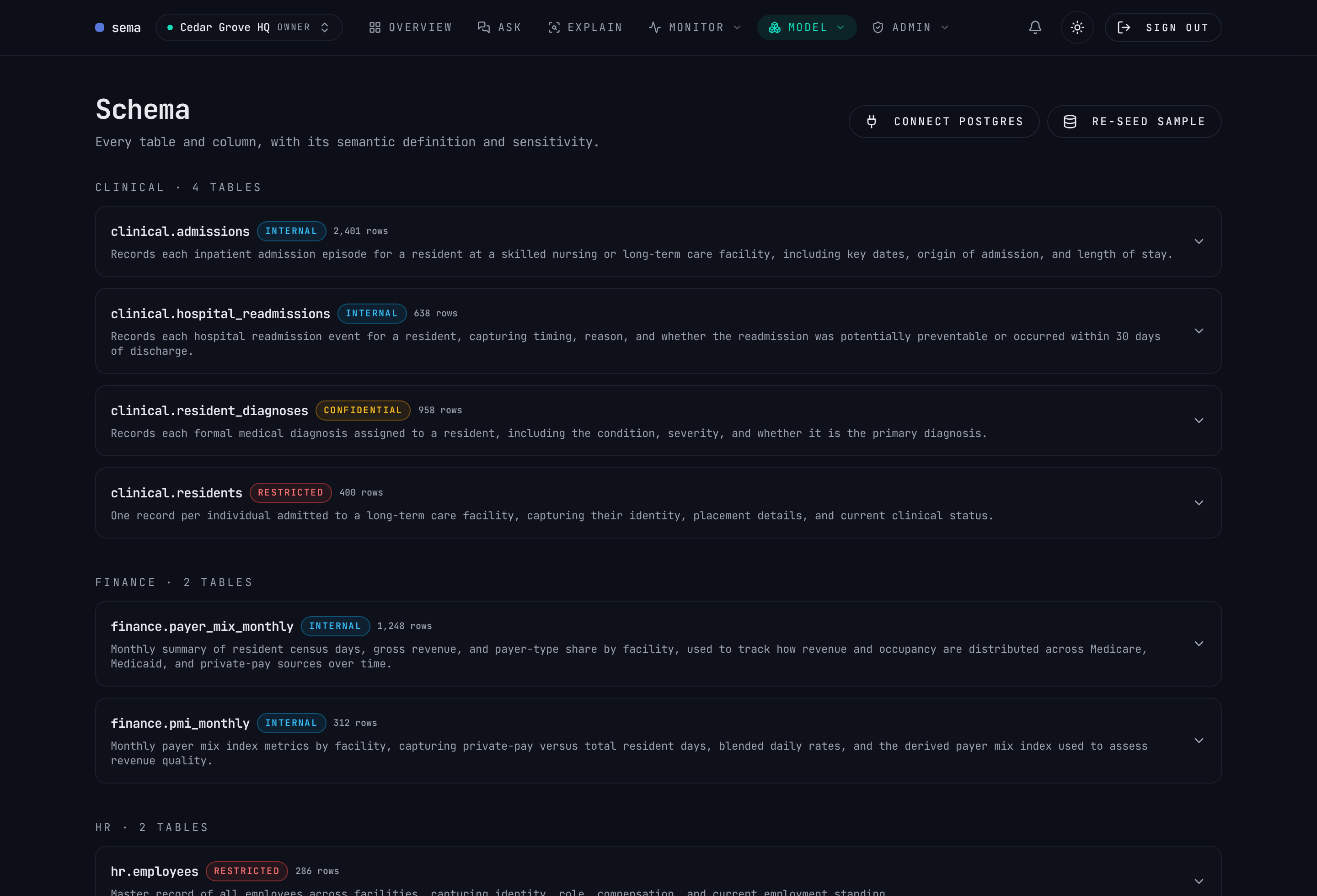
Connect your warehouse
Point Sema at Postgres, Snowflake, BigQuery or a read replica. It introspects every table, column, type and key in seconds — and flags sensitive fields automatically.
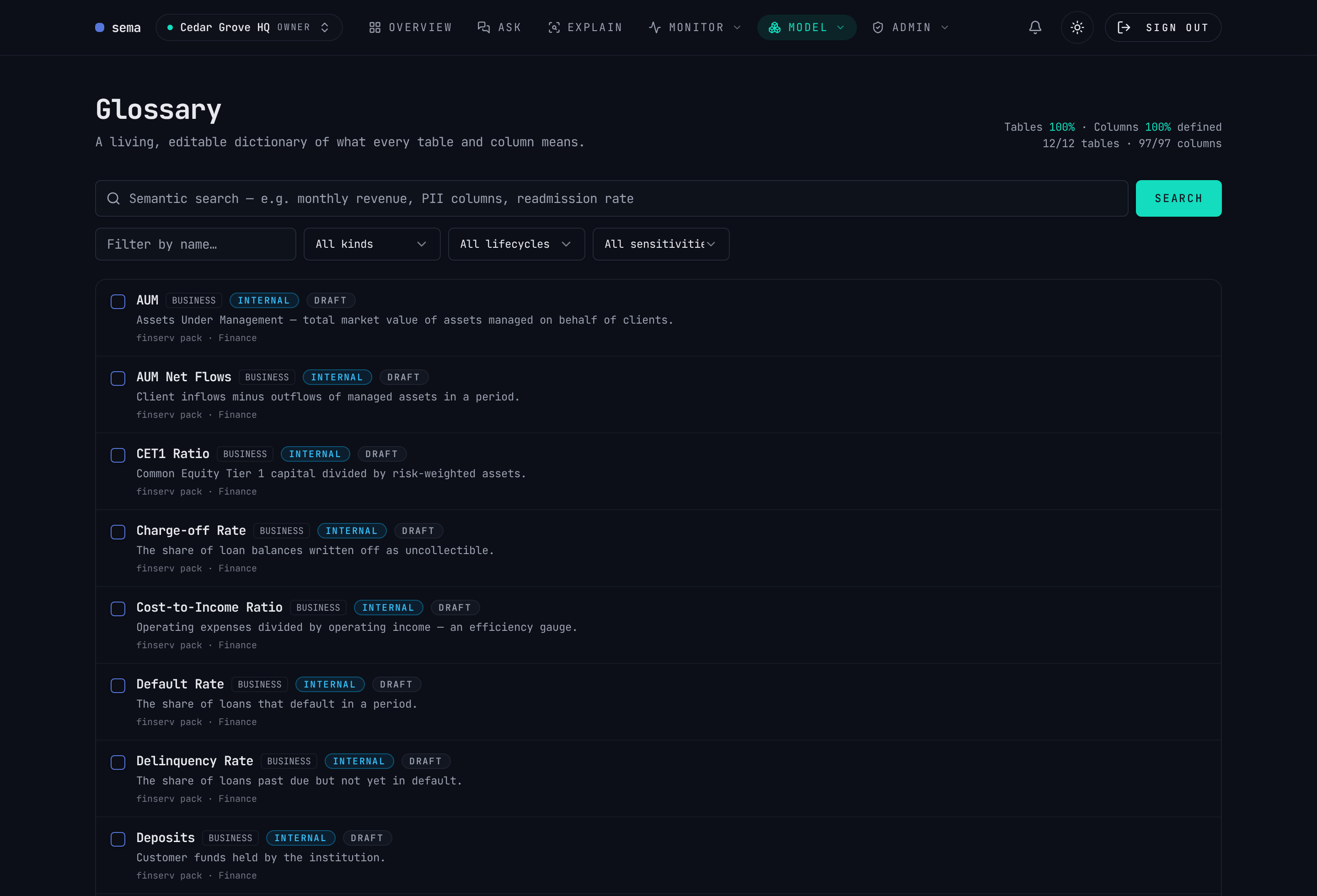
Sema writes the glossary
An LLM drafts a plain-English definition for every table and column, tags sensitivity and lifecycle, and embeds it for semantic search. Your team confirms — it never guesses silently.
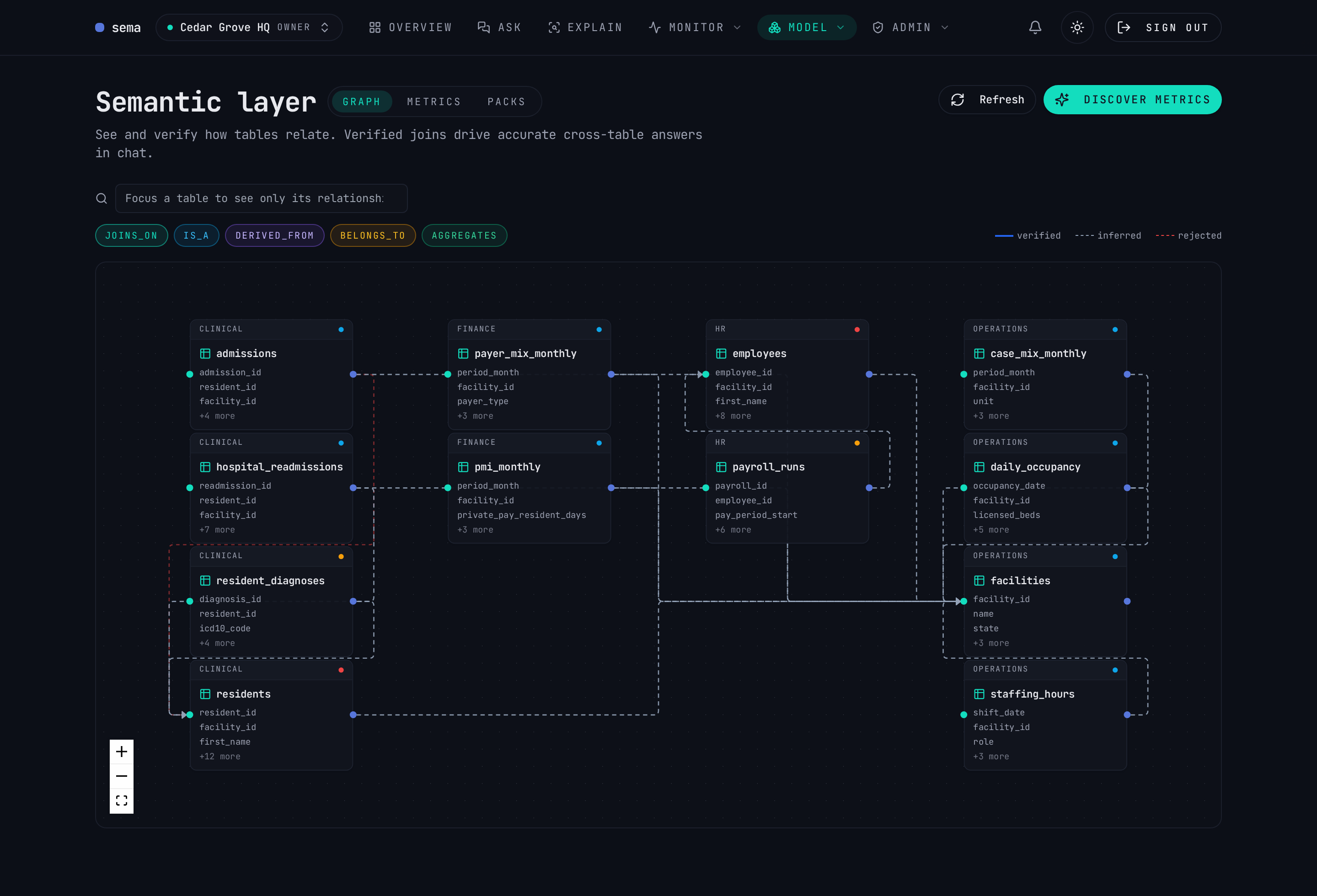
Verify the semantic graph
Sema infers the joins between tables and scores its confidence. Verify a join once and every future answer that needs it is correct — no SQL, no tribal knowledge.
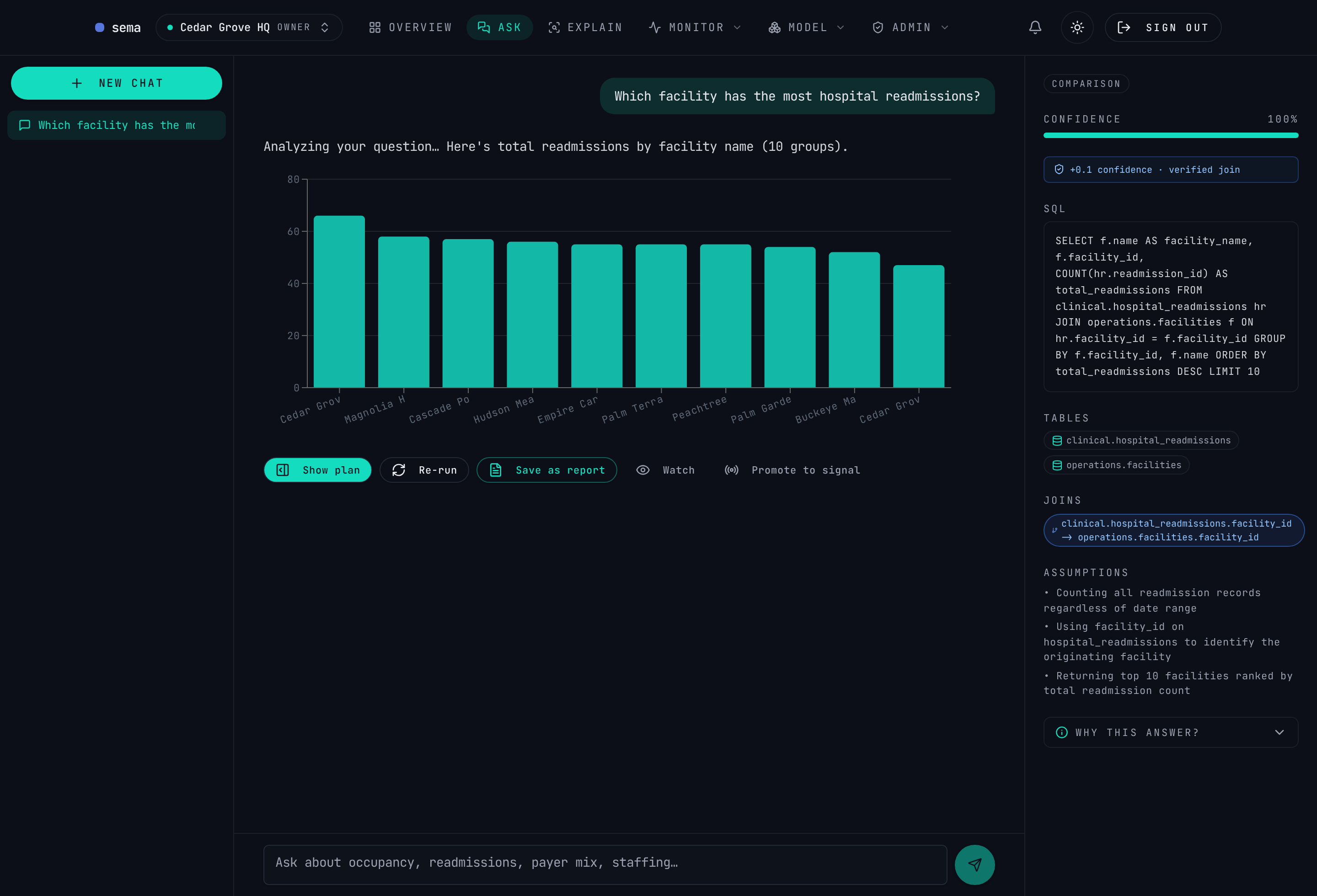
Ask in plain English
Anyone asks a question; Sema grounds it in the graph, generates read-only SQL, runs it, and auto-charts the result. It shows the SQL and the tables it touched — or asks a clarifying question instead of guessing.
Govern every answer
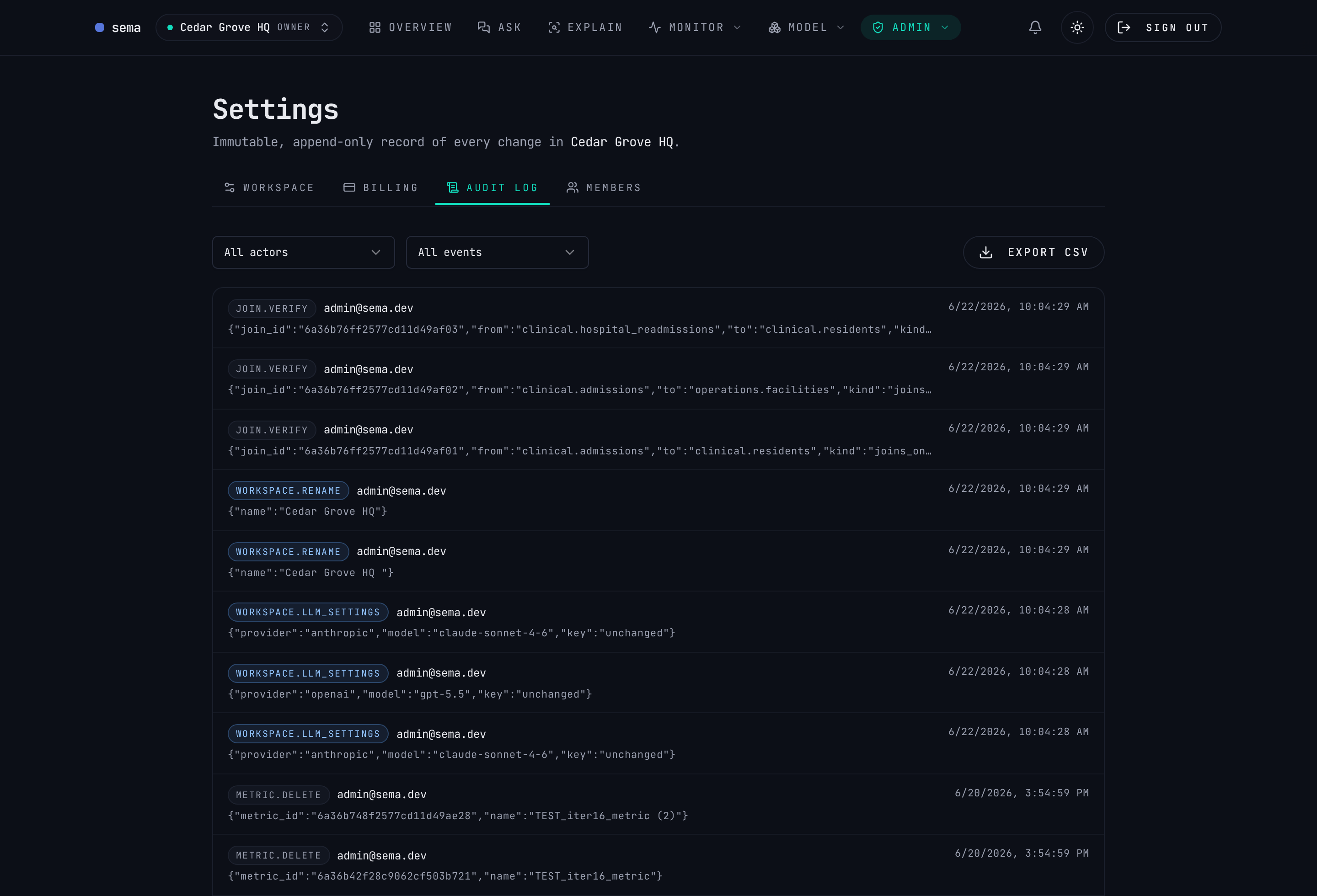
Role-based access, restricted-column masking and an append-only audit log are on by default. Every question, plan and answer is recorded — the evidence pack for any decision, in one click.
why it's different
Why Sema is different.
Three common approaches, and where they break.
Raw text-to-SQL
Guesses against undocumented columns, grabs the closest-named field, and has no idea what a metric means or who's allowed to see it.
Sema: Only references metrics, columns and joins you've approved — and refuses to guess when it can't ground the answer.
Traditional BI
Locks logic inside one tool, needs an analyst for every new question, and the same metric drifts across dashboards.
Sema: One governed definition resolves everywhere — chat, reports, alerts and the API — and business users self-serve in plain English.
RAG over schema
Embeds column names and hopes for the best; no joins, no governance, no proof of how an answer was produced.
Sema: A typed semantic graph with verified joins, plus the exact SQL, graph path and audit record behind every answer.